Shamanism is a primal belief system with its own form of symbolism and cosmology, inhabited by beings, a spiritual practice that has been in coexistence over several decades with varying cultures. Its origin in Nepal precedes the commonly established religion, i.e., Hinduism and Buddhism. The shamanic threads of deep connection to the divine is not a formalized system but a group of activities and experiences shared by shamans in cultures of a different kind.
Shamans are the religious functionaries who have special abilities to travel the realms of invisible worlds and use their spirit relationship to create changes in the physical world, for the healing of the individuals or the community. It is considered to be a universal spiritual wisdom inherent to the indigenous tribes.
In Nepal, Shamans are identified as ‘Dhamis’, ‘Jhankris’, ‘mangpa’, ‘Bonpo’, ‘Bijuwa’, ‘Ojha’, etc. and the local names differ according to the tribes they belong to. The different ethnic groups could be Newars, Kirat, Tamang, Rai, Tharu, Tibetans and so on. Even though unique terms are used to identify these Shamans in different communities and the ways they perform rituals vary, the very objective of their existence is pretty much same. People believe them to have a supernatural healing power and are able to interact with the spirits. It is said that they can cure sickness and diseases caused by malevolent spirits by evoking the animal images as spirit guides, omens and message bearers.
People go to Shamans not just for curing the physical disease but also to sort out mental stress, emotional problems and relationship issues lying within the families, communities and the universe. Shamanism in Nepal is based on an animistic belief that honors Mother Earth and pays respect to the spirit that resides in all living beings. The faith of Nepalese resides in transmigration of souls from one body to another through cycles of birth and rebirth.
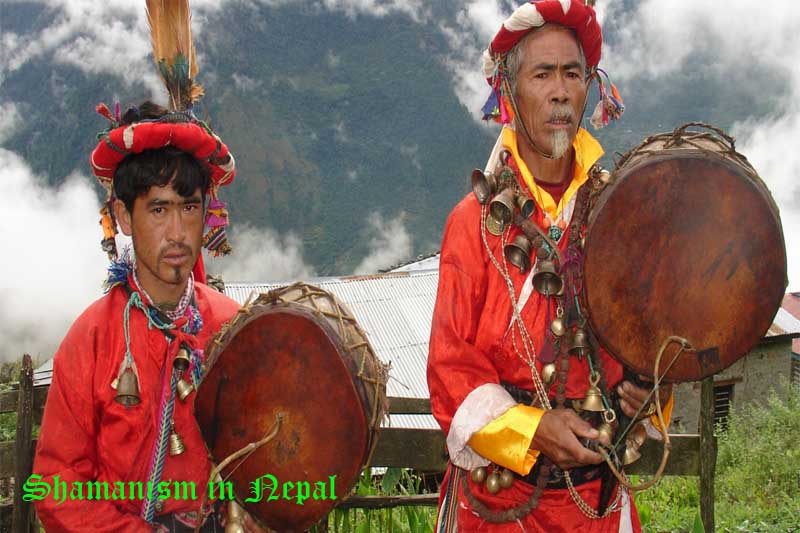
Shamans have long been the healers, storytellers, singers, dancers, artists, and musicians. They perform rituals that induce trance to incite visionary ecstasy and go on vision quests. They also communicate the secret language hidden in the form of rhythms, vibrations, warm and cool sensations of the physical body and Mother Nature. The articles that are used while performing Shamanism and the performance itself, is an interesting show for people who are curious about it. It also reflects the tradition and custom as one can witness stuff like denguru (Shamans’ drum), dhunga (stones and crystals), mala– bead necklaces (made from seeds, stones or bones), a chindo or calabash (vessel made from the gourd, bones and feathers), Thangkas (paintings and drawings depicting the gods, demons and spirits in the other realities) along with wormwood, mugwort, cannabis, various dhatura species, that may give a weird look. They also consume alcohol while performing a ritual and are said to neutralize the alcohol by transforming it into nectar that is known as Amrit (elixir of life).
Asian Eco Journeys organizes customized Shamanism Tours to acquaint the visitors with authentic practices and ages long beliefs carried out in villages of Nepal. Detail itinerary of Shamanism tour to the Dhading district of Nepal is provided as under;
Day 1- Arrival in Kathmandu
The starting point of this trip begins from your arrival in Kathmandu. Once your Nepal Visa gets issued, collect your luggage, clear the customs and move toward exit terminal. As soon as you come out of the exit terminal please check our office representative with your name placard. S/he will assist you to the hotel.
Arrival at hotel and check in
Overnight stay at Hotel in Kathmandu
Day 2- Drive from Kathmandu to Samari Bhanjyang (1,500 m)
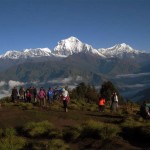
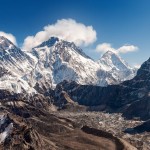
We drive from Kathmandu to Samari Bhanjyang for about 6 hours. We will be passing through the famous Trishuli Bazaar which is also a gateway to Langtang. Samari Bhanjyang gives a very pleasant view of the snow Scrapped Mountains along the Langtang, Ganesh, Manaslu and Boudha Himalaya ranges.
Arrive at Hotel in Samari Bhanjyang and check into the Hotel/ Lodge
Overnight stay at Hotel/ Lodge in Samri Bhanjyang (Meals: B, L, D)
Day 3- Trek from Samari Bhanjyang to Sele (2,000 m)
Next day, we leave Samari Bhanjyang and walk for about 6 hours till we reach Sele. Sele is an interesting village resided by people of Tibetan origin (Gurungs and Tamangs). Lots of people in Sele are engaged in Shamanism practice and we can appoint the expert one in the community to showcase where you could also be a part of their healing practice if you wish.
Arrive at Hotel in Sele and check into the Hotel/ Lodge
Overnight stay at Hotel/ Lodge in Sele (Meals: B, L, D)
Day 4- Trek from Sele to Katunje Village (1,760 m)
Katunje is only 2 hours away from Sele village. It is a small town where weekly market called ‘Hat Bazaar’ takes place. People from nearby villages come to buy and sell things of daily needs in the market. On the days where markets are open, many Shamans show up with their unique dresses and the drum made of goat skin. We arrange these rituals be performed during the evening.
Arrive at Hotel in Katunje and check into the Hotel/ Lodge
Overnight stay at Hotel/ Lodge in Katunje (Meals: B, L, D)
Day 5- Trek from Katunje Village to Khalchet (1,200 m)
On our 5th day, we take a walk for about 3 hours and reach Khalchet village. We will get to visit the community of caste that are considered ‘low and untouchables’ in locale but are rather, just a cluster of the population as any others. After a short walk around the village, we will observe the cultural program organized by the mother’s group and the local community.
Arrive at a camp/ indigenous home in Khalchet
Overnight stay at a camp/ indigenous home in Khalchet (Meals: B, L, D)
Day 6- Trek from Khalchet to Dhanding Besi (520 m) and Drive back to Kathmandu
Today we trek down through the river basin and small settlements to Dhading Besi. Dhading Besi is the headquarters of the Dhading district. After 2 hours of walk, our journey shall come to an end by driving back to Kathmandu from Dhading Besi, relishing scenic beauty on the way.
Overnight stay at a Hotel in Kathmandu (Meals: B, L, D)
Day 7- Free for Personal Activities
The day could be spent freely where you can sightsee the richness of cultural heritages and tourist destinations in Kathmandu Valley such as Boudhanath, Swayambhunath, Basantapur, Thamel, etc.
Overnight stay at Hotel in Kathmandu
Day 8- Departure to Home
Enjoy your journey to the fullest until final departure. We will transfer you to the airport 3 hrs earlier your scheduled flight to the next destination.
We hope you to had a wonderful trip with us. Please provide your valuable suggestions and feedbacks to help us improvise our services and if you wish to have a customized trek, we will be happy to organize according to your wish. Thank you!